
Wood Coating & Polish
Professional home painting. Premium Royaltec paint included. Wood is the one surface where the old finish decides almost everything. Stripping back to bare timber and recoating over a sound existing polish are different jobs, and the difference shows up in the price.
For homes with a floor area of 600 sq ft and above.
Ask what it costs to polish a door and the honest answer starts with a question: what is on it now? A door with a sound finish that needs a light key and a fresh coat is straightforward. A door with a cracked, yellowed film has to be taken back to bare timber first, and that stripping is most of the labour.
Species matters too. Teak, sal and rubberwood take stain and sheen differently, and an open-grained timber will drink more coating than a close-grained one. The same shade on two different woods will not land in the same place, which is why sheen and colour are confirmed on the actual piece.
Natural finish or opaque?
This is the first decision, because it changes the preparation. A natural finish leaves the grain visible, so every repair and sanding mark stays on show and the surface has to be worked properly. An opaque finish covers the grain, which forgives patched timber but ends the wood-look for good. Going back from opaque to natural means stripping the whole piece.
What about the thinner?
Getting the solvent right is not a detail. Royaltec NC Thinner is intended for nitrocellulose-based paints, lacquers and primers, and supports the flow, quick drying and levelling that spray application needs. Royaltec Enamel Thinner is intended for oil-based enamels and synthetic primers. An incompatible solvent affects both the application and the cured film, so the coating and its matching thinner are named together in the quote.
Interior joinery and exterior doors also age differently. A front door takes sun and driving rain on one face and stays sheltered on the other, so it is normal for the outer face to need recoating on a shorter cycle than the wardrobes inside.
Doors, windows and wardrobes are refinished as part of our work across Madurai.
The same service runs in Coimbatore, including furniture handled on site.
What’s included
Grain kept, or covered, by choice
You decide whether the timber stays visible or the finish goes opaque, before sanding starts.
Sanding taken to the right depth
Only as far as the existing finish requires, so the profile and edges stay crisp.
Compatible thinner specified
The solvent is matched to the coating, which is what keeps the film flowing and curing correctly.
Carpentry called out separately
Rot, termite damage and failed joints are a carpenter’s job, and we say so rather than coat over them.
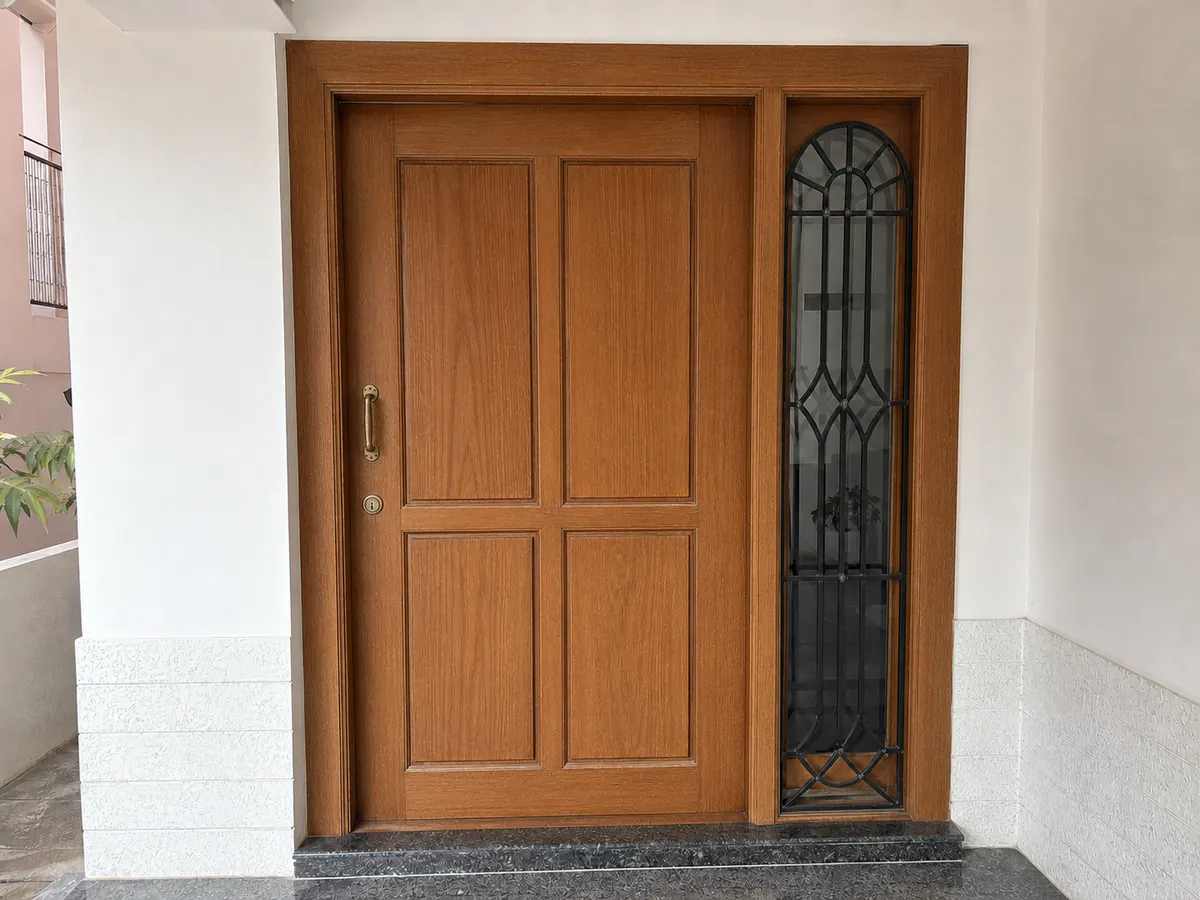
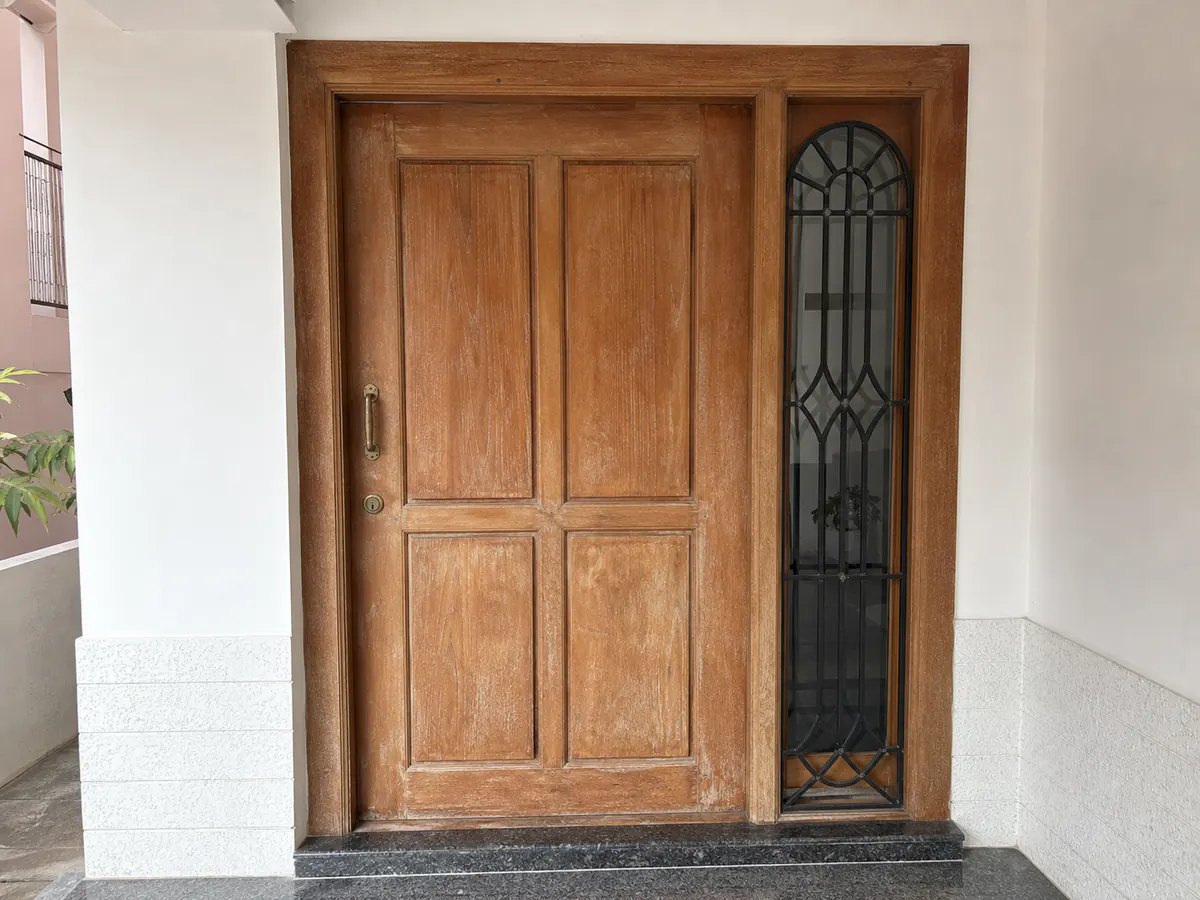
A weathered door, brought back rather than painted over
The same door before and after preparation and refinishing, with the grain left visible.
Recoat, or take it back to bare wood?
The condition of the existing film decides the route, and the route decides most of the cost.
| Sound finish | Worn finish | Failed finish | |
|---|---|---|---|
| What you see | Even sheen, no lifting | Dull, thin on edges and handles | Cracked, flaking or yellowed |
| Preparation | Clean and light key | Sand back worn areas and blend | Strip fully to bare timber |
| Colour freedom | Same or darker only | Limited | Full, including lighter shades |
| Effect on the quote | Lowest labour | Measured per piece | Highest labour, best result |
Each door, window or unit is assessed on its own rather than priced as one set.
Preparation is the job; coating is the last step
1. Assess and dismantle
Handles, locks and hinges come off so edges and rebates can be finished properly.
2. Strip or key
Take the old film back as far as its condition requires, no further.
3. Repair and sand
Fill open joints and dents, then sand through the grits until the surface is even.
4. Coat and cure
Build the coats with the specified thinner, then allow proper curing before rehanging.
The products this service uses
The wood coating itself is selected and named in your quote to suit the timber and the finish you choose. The thinner we use has to match it.
Starting price
Price after site inspection
Where it is used
Doors, windows, wardrobes, furniture and wooden ceilings.
FAQ
If the old film is sound and you are staying the same shade or going darker, yes, after cleaning and a light key. If it is cracked, flaking or yellowed, it has to come off. Coating over a failed film means the new finish fails with it.
Only by stripping back to bare timber, and even then the result depends on how deeply the old stain has penetrated. It is achievable on most doors and wardrobes but it is a full strip-and-refinish job, so it should be quoted as one.
Yes. An opaque finish covers the grain and is a sensible choice for patched or mismatched timber. Be aware it is a one-way decision: returning to a natural wood look afterwards means stripping the whole piece.
That is a carpenter’s work and it has to happen before any coating. We will point it out at the site visit and keep it out of our scope rather than sealing over damage that will keep spreading underneath.
Because it controls how the coating flows and cures. NC Thinner suits nitrocellulose lacquers and primers, and Enamel Thinner suits oil-based enamels and synthetic primers. Using the wrong one affects application and the finished film, so the pair is specified together.
Wardrobes, doors and fitted units are normally finished in place with the area masked and ventilated. Loose furniture is easier to handle in a set-aside space. Either way the working area, ventilation and drying time are agreed before we start.
Discuss your painting project
Tell us your home’s floor area, city, painting needs and timing. We will confirm eligibility and availability before arranging a site visit and an itemised quote.